How to make a useful Secret Santa wishlist
Use eight short wishlist questions and adult or child examples to give your Secret Santa useful ideas without oversharing.
Written and checked by Francisco T. Barbosa on October 9, 2026.
Eight wishlist questions to copy and answer
A useful Secret Santa wishlist gives your giver two or three ideas within the budget, the details they need, such as a size or format, and what you already have enough of. Answer only the questions that help your giver. A parent should write and check a child’s answers. A few clear interests and affordable choices are enough; every answer is optional. If your family has no exchange yet, create a family exchange and add these answers to your wishlist there.
- Which hobbies or activities are you enjoying?
- What kind of book, game, craft or useful item would you welcome?
- What do you already have enough of?
- Are there gift categories you would prefer to avoid?
- Are handmade gifts or experiences welcome?
- Which colour, format or size matters for an idea you have mentioned?
- Can you suggest two or three choices within the agreed budget?
- Would you prefer one of those ideas or a surprise inspired by your interests?
Offer direction, not a shopping demand
A useful wishlist gives the giver choices. Add a few ideas within the exchange budget, or describe what you enjoy: cozy mystery books, gardening on a balcony, baking bread, or sketching outdoors. “Something for my hobby” becomes much easier to act on when you mention what you already have.
For specific items, include the exact title or size and an HTTPS product link. Prices entered into the wishlist are guidance, not live quotes. The giver should check the current price, delivery cost, availability, and returns policy with the retailer.
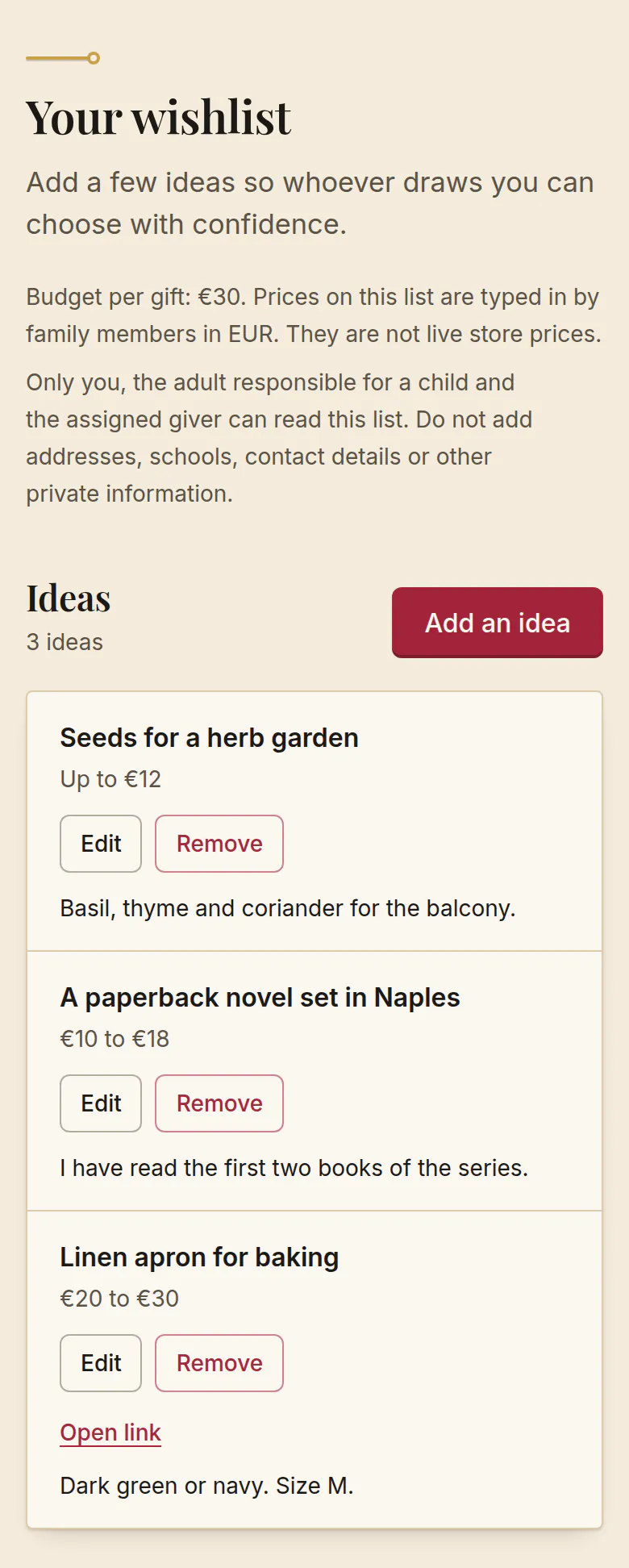
Two examples that leave room for choice
These examples describe interests without an address, school or contact details. The parent and buyer still need to check the suitability of any particular item.
| Wishlist | Useful notes |
|---|---|
| Adult | I enjoy balcony gardening and mysteries in paperback. Seeds or a book within our budget would be lovely. I have enough plant pots; handmade gifts are welcome. |
| Child, written by a parent | Enjoys drawing imaginary animals and paper models. A small art set or craft-project book would be welcome. We already have plenty of colouring pencils. |
For children, let a parent edit
A parent can turn “I like animals” into useful suggestions such as illustrated wildlife books or animal-themed craft materials. Add an age range only if helpful, and avoid presenting it as proof that a particular product is safe.
Do not include an address, school, contact information, or sensitive personal details in notes. Delivery arrangements belong in a separate trusted adult conversation, not a gift recommendation prompt.
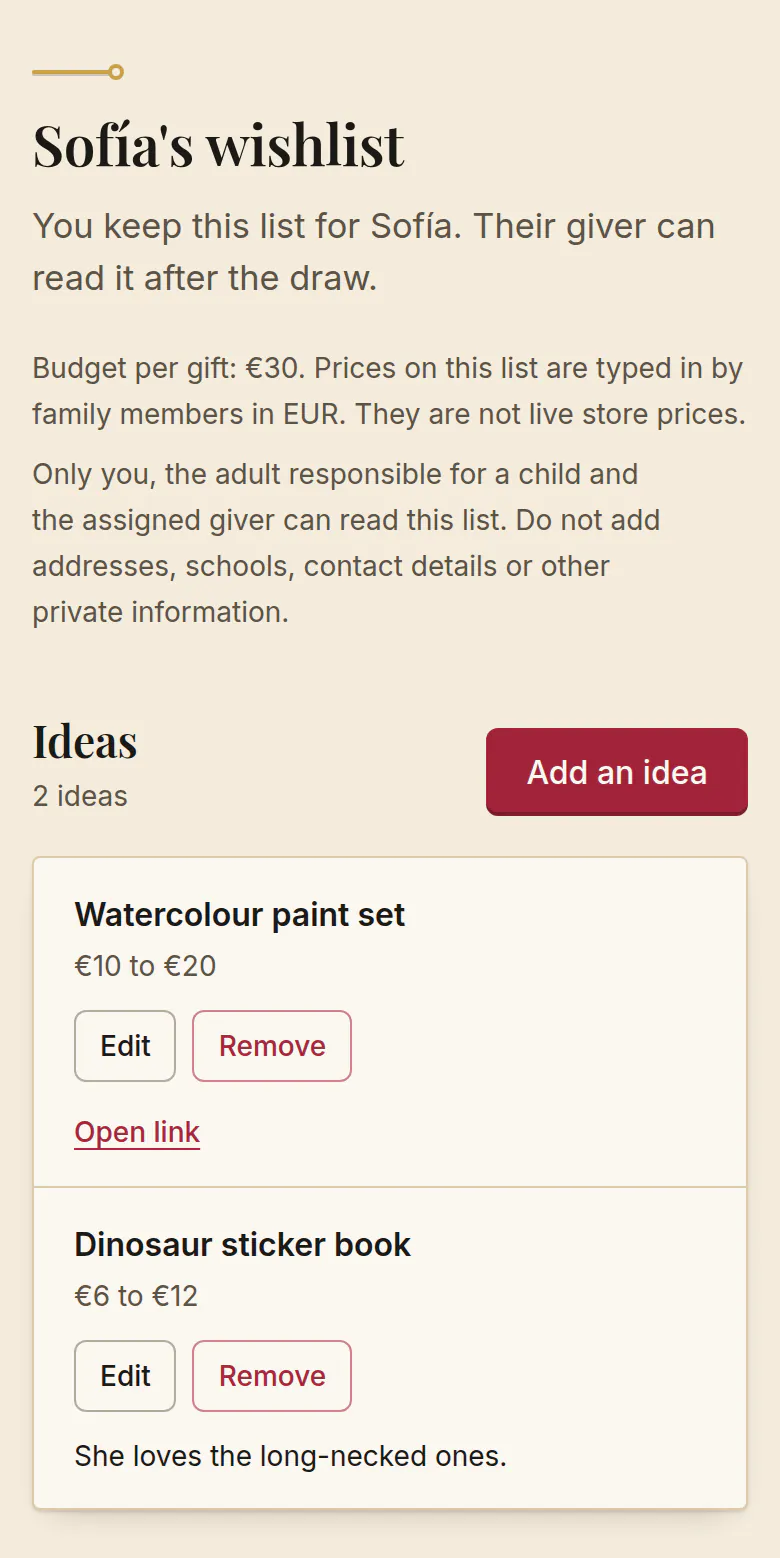
Leave room for a surprise
It is fine to write “surprise me” with a few interests and dislikes. Mention whether experiences or handmade gifts are welcome. A short list can be more helpful than twenty near-identical products.
You can update your wishlist after the draw, but remember that your giver may already have chosen something. If an important preference changes, use the family’s agreed communication channel without demanding to know who drew you.
Frequently asked questions
- What should I put on a Secret Santa wishlist?
- Two or three ideas within the agreed budget, the details a giver needs, such as a size, colour or format, and what you already have enough of. A few interests or a “surprise me” note also help.
- Should a wishlist include links and prices?
- You can add the exact title or size and an HTTPS product link. A price you type is guidance, not a live quote; the giver checks the current price, delivery cost and returns with the retailer.
- Can I change my wishlist after the draw?
- Yes, but your giver may already have chosen something. If an important preference changes, use the family’s agreed channel without asking who drew you.
Put the plan into practice
Invite the adults, include children through a parent, and agree the gifts before drawing. Core exchanges and wishlists are free.